
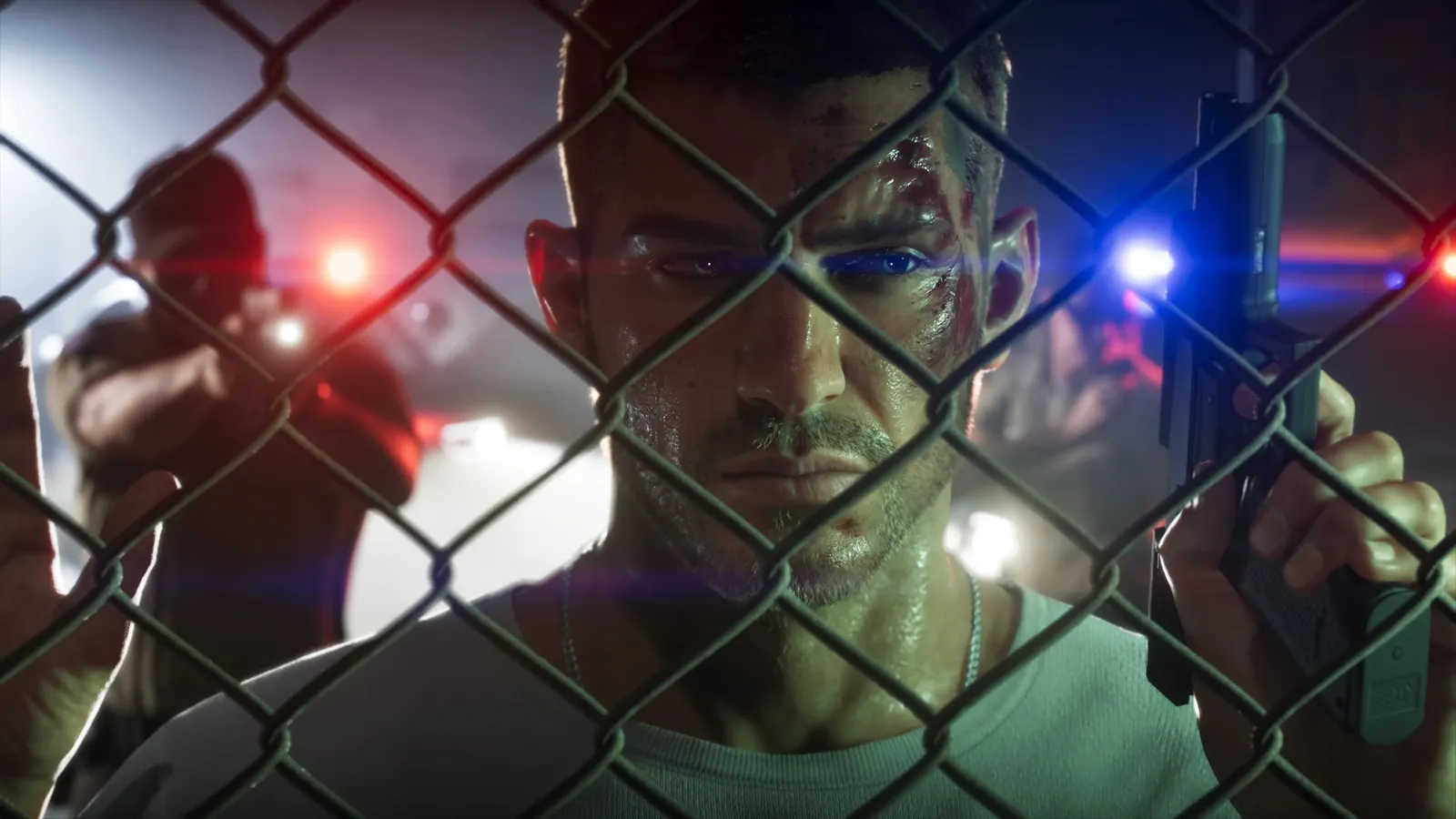
GTA 6's police system is reported to use information about a crime, the suspects and their vehicle instead of treating every officer as instantly all-knowing. This page focuses on detection, recognition, dispatch and pursuit behavior. For stars, heat escalation and the process of losing wanted status, use the separate wanted-system guide.
How a crime reportedly reaches police
IGN's firsthand Rockstar North report says police response begins after an NPC witnesses a crime or an alarm is triggered. Officers then receive details about the incident and go to the reported area. This is a more specific claim than “crime always creates police”; it also leaves open how different witnesses, alarms and scripted missions behave for Jason and Lucia.
Dazed describes a world that reacts to openly carrying a rifle and to player behavior. That supports a broader reactive-world design, but Dazed does not provide a formula mapping every public reaction to a dispatch. Civilian alarm, discomfort and an active police pursuit should not be collapsed into one state.
What police can reportedly know
| Information | Reported consequence |
|---|---|
| Appearance | Police can receive a physical description; later appearance changes may affect recognition. |
| Clothing | An outfit can remain known independently of a suspect’s face or hair. |
| Vehicle | A seen getaway car can become part of what officers are looking for. |
| The pair | If Jason and Lucia are reported together, splitting up can change the search problem. |
IGN reports those details as separate pieces of police knowledge. The practical implication is not that one cosmetic item makes the player invisible; it is that recognition can depend on several facts at once. Exact icon meanings and exceptions should be checked against final retail behavior before being turned into a guaranteed escape recipe.
Search and pursuit behavior
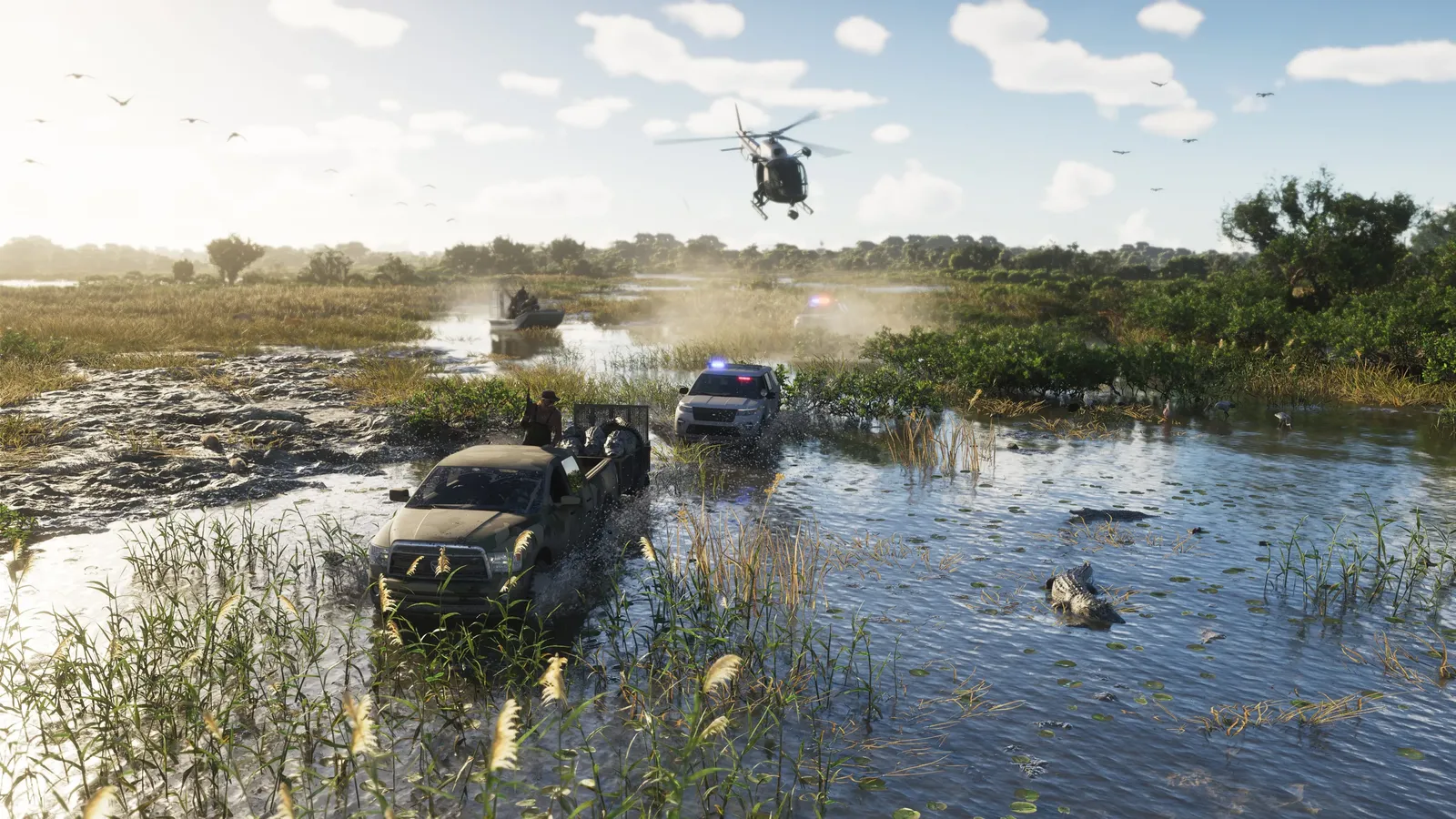
IGN says the reported crime scene can remain a marked “hot area” while officers continue searching it, even after the protagonists have moved away. It also describes police building outside certain robbery locations and waiting for a suspect to emerge. Those examples suggest location-aware behavior rather than a simple stream of patrol cars spawning behind the player.
TroisCouleurs' firsthand preview provides a complementary example. After police were called to a villa, Rob Nelson explained that officers could know what Jason was wearing, yet might fail to recognize him in a vehicle they had not seen him enter. TroisCouleurs attributes Nelson's comparison to a smarter, more sophisticated system than GTA V.
Three useful examples without overpromising
- A witnessed store robbery: Police receive the report and respond to that location; reactions can differ by the people present.
- A recognized getaway car: Changing direction alone may not remove the identifying fact that officers know the vehicle.
- A car police never saw you enter: TroisCouleurs reports the possibility of passing without recognition, depending on what officers know.
These are illustrations from previews, not universal laws. Scripted sequences may force escalation, and the game was still being adjusted during the demonstrations.
What belongs on the wanted-system page instead
The number of stars, status icons, escalation thresholds, hollow-star behavior and the conditions for clearing heat tell you about your current wanted status. They do not, by themselves, explain what an individual officer has seen or knows. Consult the linked wanted-system guide when you want to understand those indicators and escape conditions.
For the wider mechanics context, see the confirmed and reported gameplay guide. For weapons and public reactions, use the weapons guide.
What remains unknown about police AI
- Exact sight, hearing and communication ranges.
- Dispatch times by crime and location.
- How roadblocks, helicopters and specialist units are selected.
- Whether every demonstrated behavior is identical across all missions and difficulty conditions.
Questions readers ask
Do GTA 6 police instantly know who committed every crime?
IGN reports that a crime must be witnessed or trigger an alarm and that officers work from reported information; exact exceptions remain unknown.
Can police recognize your clothes and car?
Firsthand reports say those details can become part of the police description.
How many wanted stars are there?
That belongs to the wanted-system guide; the reported count is not treated here as an official final rules sheet.