
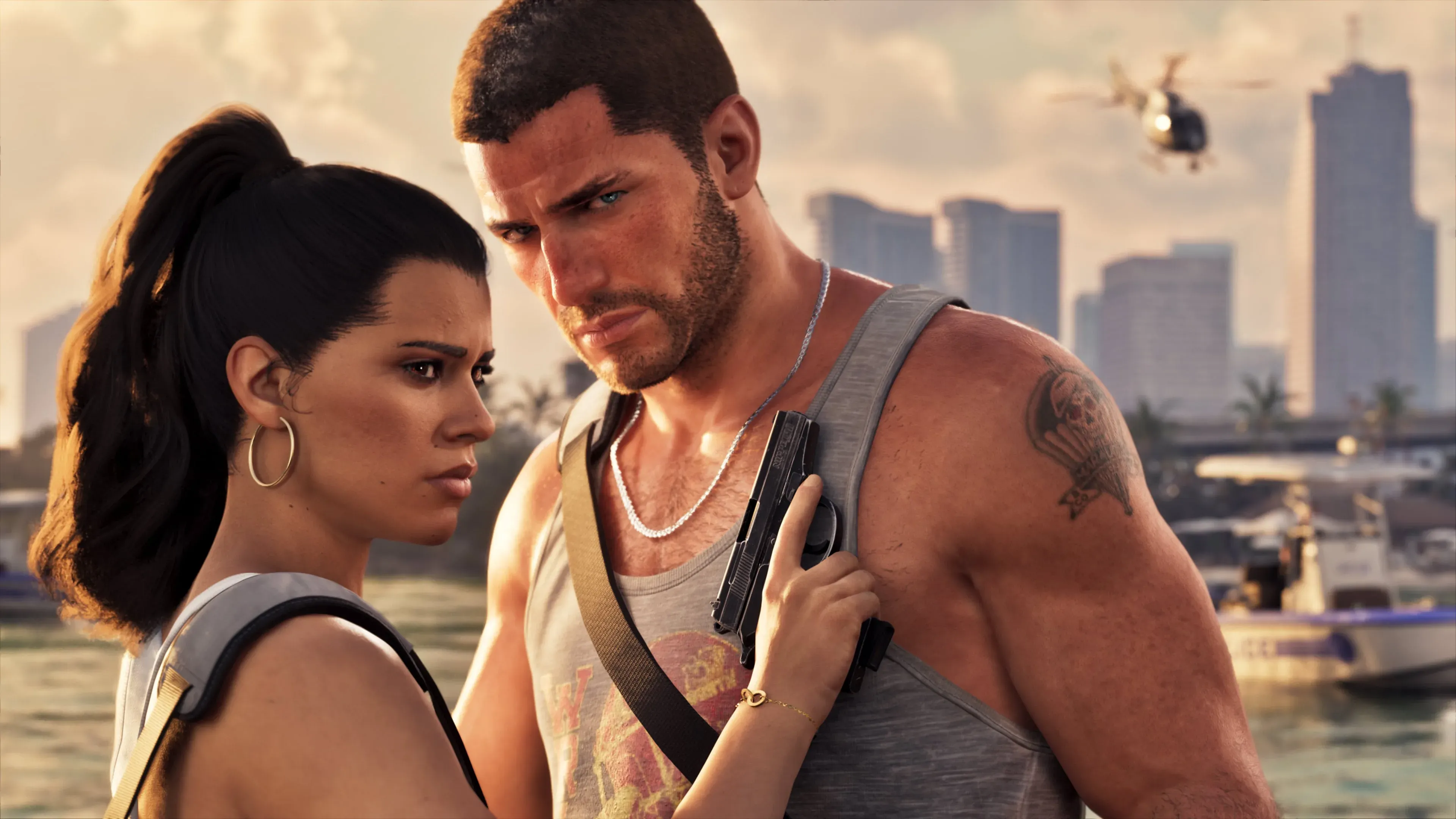

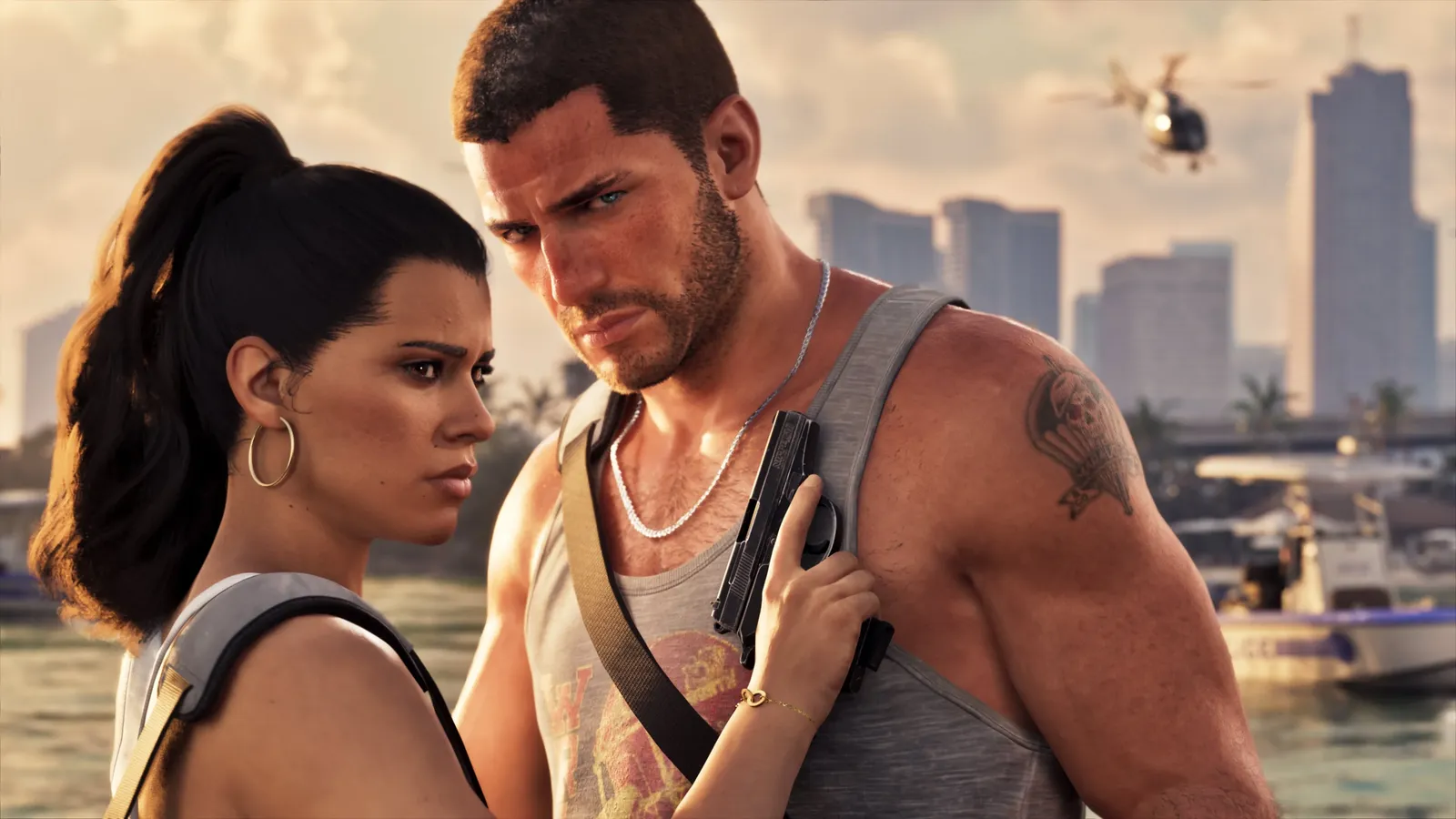
Rockstar wants players to care about Jason and Lucia with some of the emotional weight they brought to Arthur Morgan—but that does not mean GTA 6 is repeating Red Dead Redemption 2. In an extensive TROISCOULEURS interview, Rockstar North co-studio head Rob Nelson described Arthur's journey as a major reference point when the team considered how to deepen Grand Theft Auto's next protagonists.
Nelson said Rockstar wanted to carry forward the richer world interaction developed for Red Dead Redemption 2 and the “emotional connection” players formed with Arthur. The solution for GTA VI was not another solitary lead. The studio returned to multiple protagonists, narrowed the design to a duo and built the story around a couple whose concern for one another can give danger more impact.
Quick answer: what did Rockstar say?
| Question | Confirmed answer |
|---|---|
| Is Arthur Morgan in GTA 6? | No such crossover was announced. |
| Is GTA 6 copying RDR2's story? | No. Rockstar discussed emotional depth and player connection, not a repeated plot. |
| Why use Jason and Lucia as a couple? | Nelson says a partnership created a clear way to evolve multiple protagonists and make their actions matter to each other. |
| Do quiet scenes matter? | Yes. Rockstar uses everyday intimacy to increase concern during violent or dangerous moments. |
| Can player actions affect their journey? | Nelson says actions can influence the characters' journey, while the complete system remains unpublished. |
What Rockstar learned from Arthur Morgan
Nelson said Rockstar had been slightly nervous that players might find a single protagonist limiting after GTA V's three-character structure. Arthur instead gave the team room to concentrate on one journey. His actions, the events around him and the morality or honor choices could shape how players understood him.
The lesson was not simply “use one character.” It was that focused character development and meaningful world interaction could create a stronger bond. When Rockstar returned to the idea of multiple protagonists for GTA VI, it looked for a structure that could preserve that investment.
Jason and Lucia became the answer. Nelson says the team considered different options before a duo and potential relationship felt obvious. He invokes the Bonnie-and-Clyde idea as the clear form of the partnership: two leads connected not only by the player switching between them, but by what one person's decisions and risks mean to the other.
Why quiet moments can make action feel more dangerous
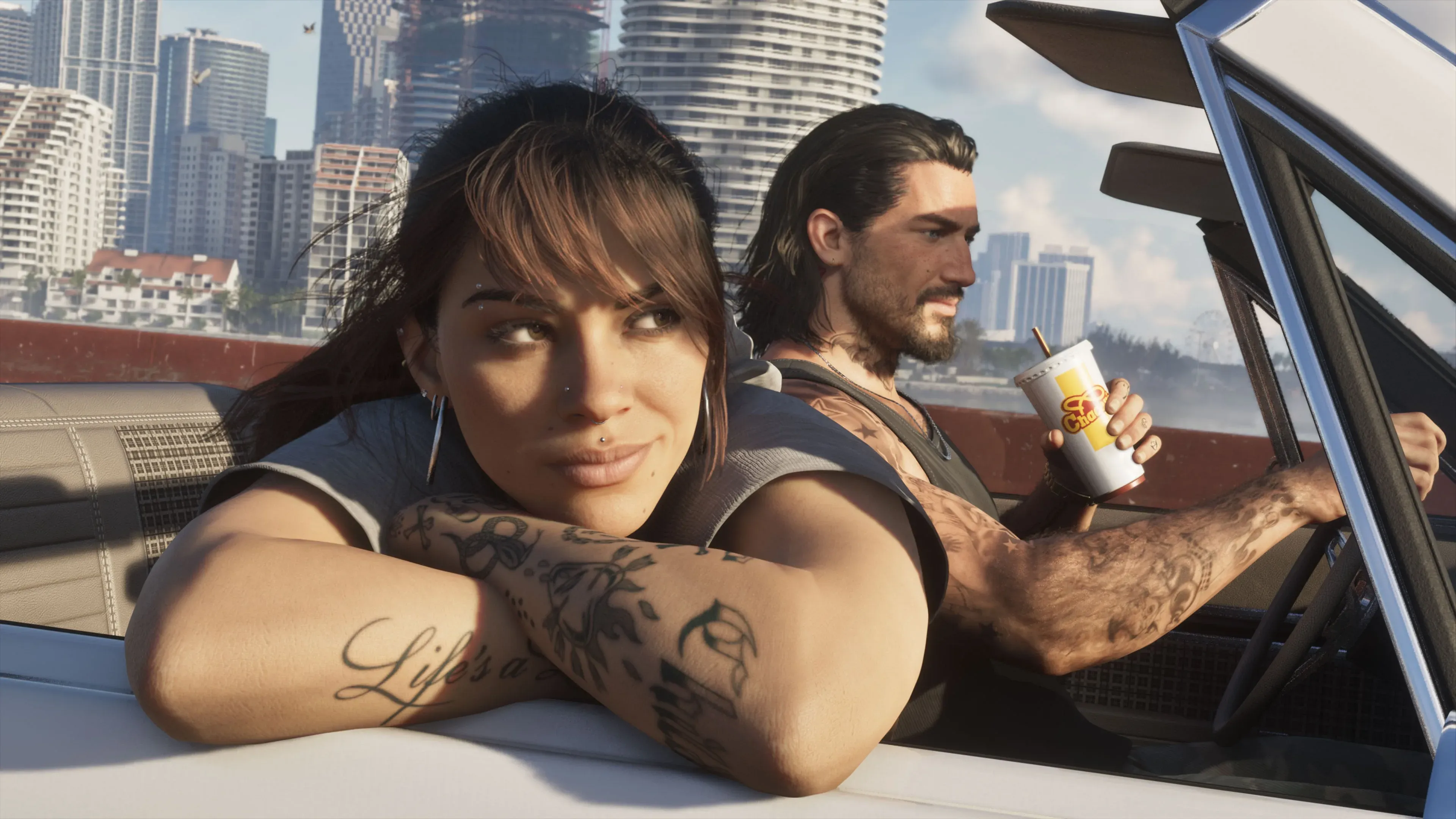
TROISCOULEURS' preview describes everyday scenes alongside robberies and chases: the pair preparing to go out, driving together and walking hand in hand. The interviewer's point is that ordinary intimacy creates concern when a mission separates or endangers them.
Nelson gives a concrete example. When Lucia is thrown down stairs and control returns to Jason without the player hearing her, the intended feeling is concern. The scene works because the player has seen them as a couple outside the immediate crisis, not just as two interchangeable action figures.
Rockstar is therefore treating calm scenes as structural, not disposable. Waiting for a partner, sharing an apartment or talking during a drive can establish a recognizable relationship. The violence then threatens something the player has experienced rather than an abstract mission objective.
How two protagonists differ from GTA V's three
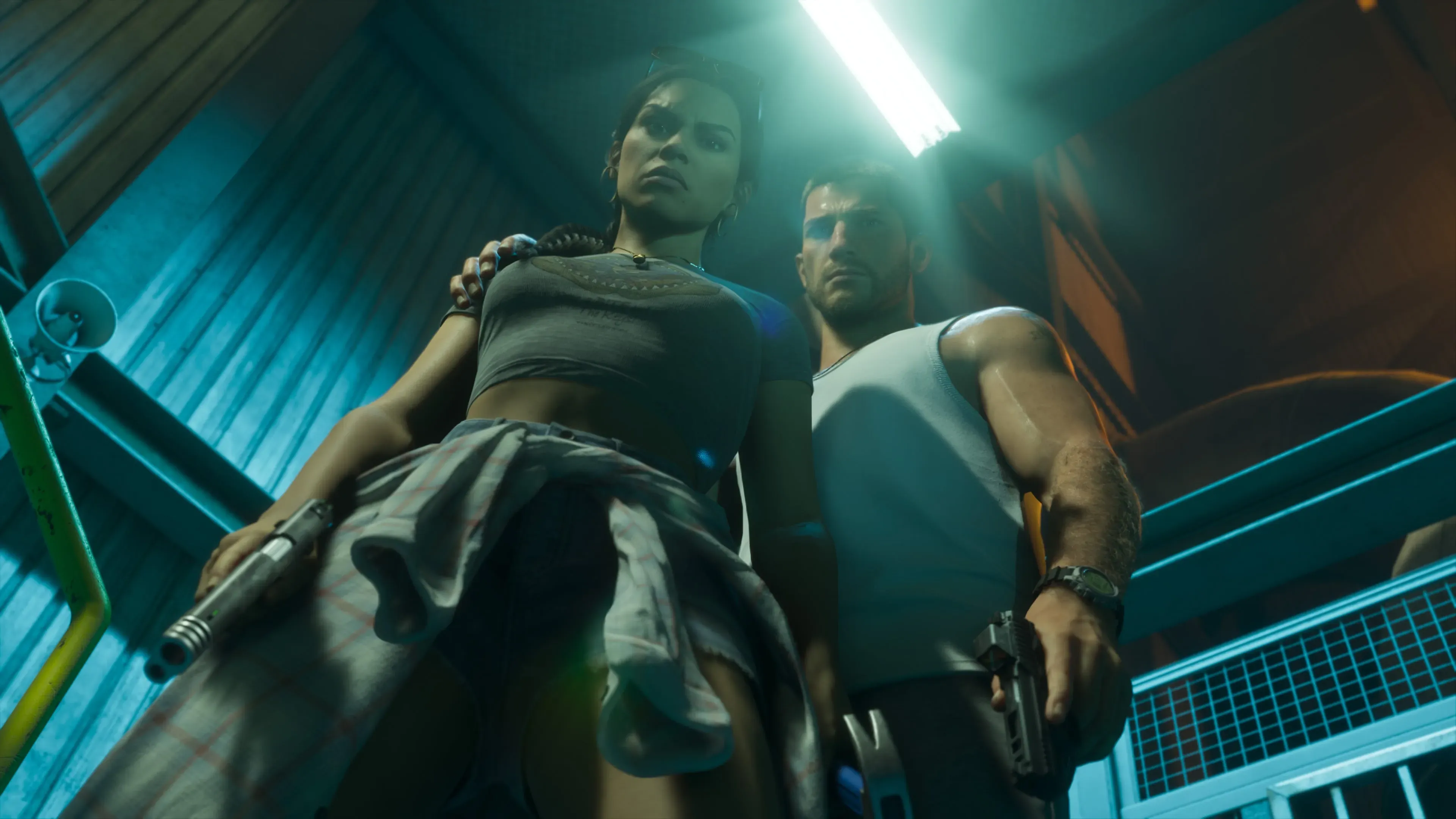
GTA V used Michael, Franklin and Trevor as connected individuals with separate homes, motives and conflicts. GTA VI's duo is a different dramatic unit. Jason and Lucia can still be controlled separately, but the relationship between them is part of the central premise.
That changes what switching can mean. Moving from one lead to the other can communicate distance, incomplete information or concern as well as a new mechanical viewpoint. It also allows the game to present the same criminal situation through two people who have a personal stake in each other's safety.
Nelson does not promise that every player will experience the relationship identically. He says Rockstar does not want to force that interest on people, while still giving players opportunities for their actions to influence the characters' journey. The complete rules, thresholds and possible outcomes have not been published.
What the Arthur comparison does not tell us
Arthur Morgan's name is a statement of ambition, not a plot leak. It does not tell us whether Jason or Lucia dies, whether their relationship lasts, whether GTA VI has an honor meter, or whether its ending resembles Red Dead Redemption 2. None of those conclusions follows from Nelson's remarks.
It also does not guarantee a particular emotional response. Rockstar can design for attachment; players will decide whether the writing, performances and systems earn it. The comparison identifies the team's goal and the design lineage behind it.
For the official facts on each lead, see our profiles of Jason Duval and Lucia Caminos. Our earlier Jason and Lucia romance debate covers the social-media argument around optional relationship play; this article is different because it focuses on Rockstar's stated narrative objective.
The final takeaway
Rockstar is trying to combine two strengths: the flexibility of multiple GTA protagonists and the sustained emotional investment it achieved with Arthur. Jason and Lucia's partnership gives the studio a way to pursue both. Quieter scenes establish the bond, switching can express concern, and player choices can influence their shared journey.
That is the confirmed creative direction. The outcome of the relationship, the exact mechanics and the story's ending remain intentionally unknown.
Related
Explore the GTA6State database.



Sources
- Rockstar wants GTA 6's Jason and Lucia to inspire Arthur Morgan's emotional connection (opens in a new tab)
Contemporary English-language report highlighting Nelson's comparison and the importance of quieter moments.
- Rockstar wants GTA 6's Jason and Lucia to inspire Arthur Morgan's emotional connection (opens in a new tab)
Large community discussion documenting the article's viral reach. Used for reaction context only.